

Why decodable text matters
Decodable text is simply text a child can sound out using phonics they've already been taught, rather than text that leans on memorised sight words, pictures, or context clues to get through. It's a well-understood idea in reading instruction: if every word on the screen is decodable, a child practises the actual skill of sounding words out, instead of guessing from a picture on the page.
That's the whole design behind Word Safari's reading rounds. A child isn't handed text that happens to be at roughly the right level; every word and sentence they meet is built, sound by sound, from exactly what they've already learned.
It also means a parent doesn't have to sit and pre-check whether a given round is appropriate. If your child has reached a tier, everything at that tier or below is, by construction, within reach, since none of it contains a sound your child hasn't been taught yet.
What's inside
Hand-curated across 7 phonics tiers, every one built from sounds already taught.
The sequence every round is built to respect, never skipping ahead.
No round ever uses a sound the child hasn't reached yet.
Game modes that turn each sentence into practice
A decodable sentence isn't the end of the exercise. Several of Word Safari's 10 game modes take the same words and turn them into read, spell and match practice straight after, so the vocabulary a child just sounded out gets reinforced immediately, rather than being read once and left behind.
That loop of reading a sentence then playing its own words back is what turns a single round into repeated practice, without your child ever noticing they're revisiting the same words from a different angle.
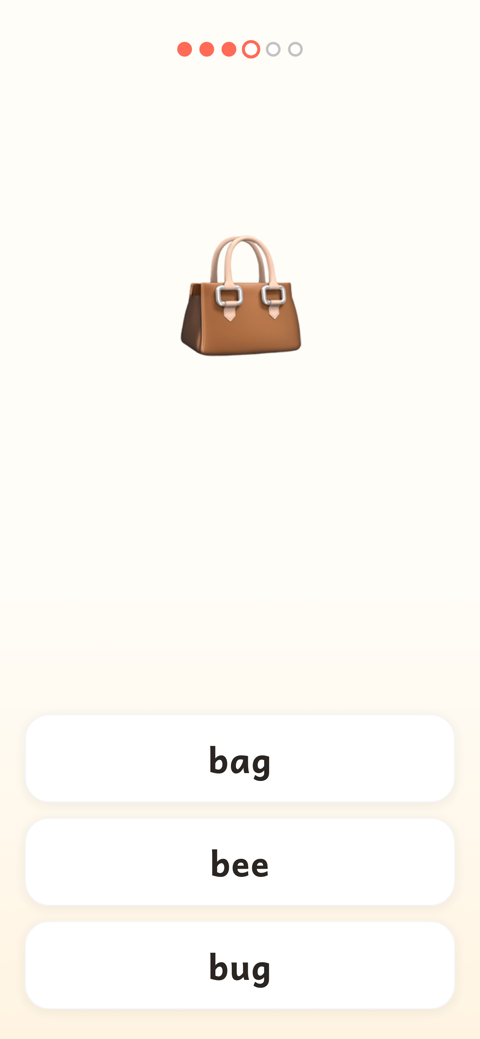
Reading-first practice vs. plain sound drilling
A reading-first decodable app
Sounds are taught, then immediately used inside real decodable words and sentences, and those same words feed back into spelling and matching games afterwards.
A plain sound-drilling app
Sounds are drilled on their own, in isolated flashcard-style exercises, without necessarily being assembled into a sentence a child reads start to finish.
Neither approach is wrong on its own; Word Safari's choice is simply to keep every sound anchored inside words and sentences your child actually reads, not just a card they tap. A child who has just read a sentence has, in effect, already proven they can use the sounds it contains, rather than merely recognised them in isolation.