
Reading Comprehension Games for Kids Who Read the Words but Miss the Story
If your child sounds out almost anything but goes blank when you ask what just happened, you are not imagining it. Word Safari checks understanding right where it happens, inside the sentences your child just read, not on a worksheet detached from them.
English content spans ages 4 to 11 across 7 phonics tiers. Understanding is checked inside every sentence round, matched to wherever your child's placement finds them.
When "she can read" doesn't mean "she gets it"
Decoding and understanding are not the same skill, and they do not arrive together. A child can sound out "the crab hid under the rock" correctly, word by word, and still have nothing left over to answer where the crab went.
That is not laziness or a wandering mind. Reading a word your brain has not fully automated yet takes real, conscious effort, and effort is a limited budget. Spend most of it getting through the sentence and there is little left to hold onto what the sentence meant, let alone a whole page of them. This is exactly why handing a struggling decoder a comprehension worksheet pitched above their reading level rarely helps: the comprehension part quietly turns into a guessing game about the pictures, because the words themselves were the real obstacle all along.
Why the sentence has to fit the reader first
Word Safari's placement, done once in around five minutes, finds where your child's decoding actually sits among 7 phonics tiers before a single sentence is served. Every sentence that follows is built from words and sounds already covered at that tier, so your child is not fighting the words themselves while trying to follow what the sentence says.
That single decision changes what a comprehension check can prove. Asked about a sentence your child could actually read, a wrong answer means something real: attention wandered, or a detail got missed. Asked about one two tiers too hard, a wrong answer proves nothing except that the words themselves were the wall.
What the comprehension check inside Word Safari actually is
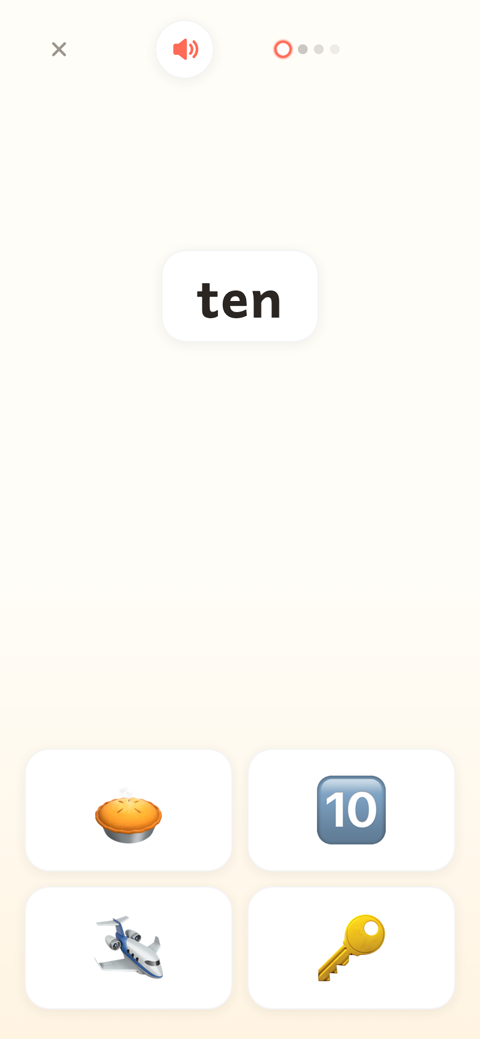
Here is exactly what happens, no more and no less. In a sentence round your child reads a real sentence and has to show they understood it: pick the word that truly completes it, match the sentence to the scene it describes, or build it back into order. A guess that ignores the meaning does not survive any of those.
A miss gets a warm nudge and another look, never a buzzer or a fail state, and Word Safari never turns a wrong tap into a wall: the round carries on, and the same idea comes back in a later round for another go. Answer well, and the next rounds quietly firm up: difficulty adapts to your child rather than the other way around.
Word Safari is a phonics, vocabulary and sentence-reading game, not a literature course. It does not teach comprehension strategies for novels or set texts the way a dedicated English class would. What it does, every time, is check that a sentence your child just read actually landed, at a level they can actually handle.
What's inside
Hand-curated across 7 phonics tiers, so a round never asks a word your child hasn't met.
Up to six children on one account, each with their own level and progress.
Placement finds the tier where decoding is easy enough to leave room for meaning.
Seven reading, three spelling, introduced gradually as your child is ready.
One placement, then every round keeps adjusting
That first five-minute placement is not a one-off test filed away and forgotten. Every round afterward adapts too, nudging tier and difficulty as your child answers, so the rounds they meet next stay matched to where they actually are, not where they started. For the full placement walkthrough, see our reading placement test for kids page, and for how all 10 modes build on each other round to round, see phonics games for kids.
See if the meaning finally lands
Sign up free and let a short placement find the level where your child can read for meaning, not just sound.
Prefer to see it first? Try a round on the homepage demo →
No ads, offline, and private by default
Questions parents ask
My child reads fluently but can't tell me what happened, is that normal?
Very. Decoding and understanding draw on the same limited attention, so a child still working to sound out every word often has little left over to hold onto the meaning. Word Safari's placement finds a level where decoding is easy enough that there is room for the meaning to actually land.
Does Word Safari test comprehension, or just phonics?
Both, inside the same round. Every sentence round checks understanding as well as decoding: filling the gap in a sentence, matching a sentence to its scene, and building one back into order all require knowing what the words mean. It is not a literature course or a graded comprehension test, just real questions about real sentences your child just read.
What happens if my child gets an answer wrong?
A miss gets a warm nudge and another look, never a buzzer or a fail state. Nothing about a miss blocks progress, and the same idea returns in a later round for another go.
Is this the same as a comprehension worksheet?
No. There is no printable page and no graded report. The check lives inside the sentence your child just read in the game, answered by tapping a picture or a word, so checking understanding feels like part of the play rather than a test bolted onto it.