
How Long Should a Child Read Each Day? The Honest Answer
Ten focused minutes, most days, beats an hour once a week that nobody enjoys. Here's why that's genuinely enough, and what helps on the days your child doesn't want to start.
English content spans ages 4 to 11 across 7 phonics tiers, so there's a level that fits inside those ten minutes wherever your child is starting from.
The short answer: ten focused minutes, most days
Most guides land on the same rough number: somewhere between ten and twenty minutes a day, not every single day, and not for hours at a stretch.
For a child just starting out, ten minutes is often the whole session: a story read aloud, a couple of rounds of practice, done. For an older child already reading chapter books, ten minutes might be the floor rather than the ceiling, the amount that keeps the habit alive on a busy day even when a longer read isn't happening. Either way, the exact number matters less than the daily part.
What research on habit formation actually shows is that consistency does more work than duration. A child who reads for ten minutes most days builds a stronger habit, and a stronger vocabulary too, than one who reads for an hour on a Sunday and nothing else all week. Choosing between a longer session twice a week and a short one most days, the short one wins.
Why little and often beats a marathon session
Attention is the real constraint, not ambition. A five or six year old has maybe ten or fifteen focused minutes in them before a reading session turns into a battle over posture and page turning. Stopping while it's still going well teaches a very different lesson than stopping because everyone's had enough.
This is also where ending on a win matters more than most advice admits. A child who finishes a session on something they got right walks away wanting to come back tomorrow. A child who finishes on the word they got stuck on, the sentence that took three tries, walks away with reading filed under "hard". Word Safari's rounds are built around that: a placement of about five minutes finds where your child actually is, then every round after keeps adapting, so a ten-minute session tends to land on a win rather than a stumble.
What ten minutes looks like at different ages
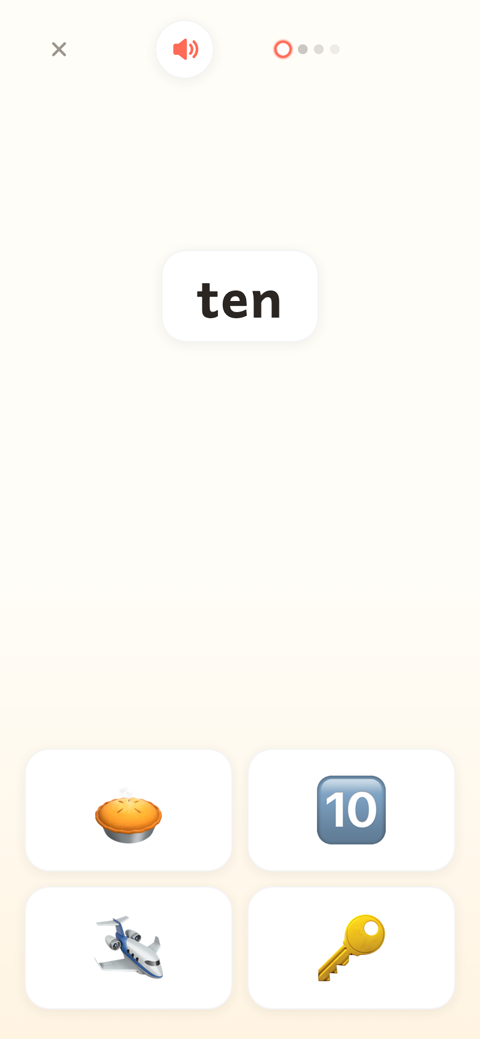
A four or five year old's ten minutes might be matching letter sounds to pictures and hearing new words spoken aloud. A six or seven year old's ten minutes stretches into blends, digraphs and short sentences they're sounding out themselves. By eight or nine, ten minutes covers more ground again: longer decodable sentences, a spelling round, maybe two shorter games back to back instead of one long one.
The shape changes with age; the length mostly doesn't. For the specifics of your child's stage, our reading app for 4-5 year olds and reading app for 8-9 year olds pages go into what that looks like inside Word Safari specifically.
What to do when your child resists
Resistance is rarely about reading itself. It's usually one of three things: the task feels too hard, it's gone on too long, or it's the same thing they did yesterday and the day before. Naming which one it is matters more than any single trick.
Too hard usually means the material doesn't match where your child actually is, not where their year group says they should be. Too long is fixed by a timer and an honest stop, even mid-sentence. Too repetitive is the hardest one for a parent to solve alone, because it needs the material itself to change, not just the encouragement around it.
This is the piece an adaptive game handles automatically. Word Safari's placement and per-round adapting mean the next round is neither too hard nor too easy, and there are 10 different game modes, seven for reading and three for spelling, so the same ten minutes doesn't feel like the same exercise on repeat. None of that removes every bad day. It does mean the app itself usually isn't the reason for one.
What's inside those ten minutes
Hand-curated across 7 phonics tiers, from first CVC words onward.
Up to six children on one account, each with their own level and progress.
The ladder that carries a child from first sounds to Year 6 vocabulary.
Seven reading games and three spelling modes, so ten minutes never repeats.
See what ten minutes a day adds up to
Sign up free and let a short placement find exactly where your child should start, so today's ten minutes lands at the right level from the first round.
Prefer to see it first? Try a round on the homepage demo →
No ads, offline, and private by default
Questions parents ask
Is ten minutes really enough, or should we be doing more?
Ten minutes done most days beats a longer session done rarely. The reasoning is repetition and consistency, not marathon length. If your child wants to keep going, let them, but ten focused minutes is a real, complete session, not a bare minimum you're falling short of.
What if we miss a day, or several?
A missed day isn't a broken habit. Picking the streak back up matters more than defending it. Word Safari's placement adapts to where your child actually is today, not where they were three weeks ago, so there's no catching up to do.
Should reading time be with me, or can my child do it alone?
Both work, and most families do some of each. Reading aloud together builds the habit, and Word Safari's short adaptive rounds let a child practise independently once they're ready, with every round built to end on a win rather than a stumble.
My child says reading is boring after five minutes, what then?
That's usually a sign the task feels too hard, too long, or too repetitive, not that your child dislikes reading. Word Safari's placement finds their actual level in about five minutes, then keeps adapting round by round, so the ten minutes stays at a difficulty they can handle.