
Reading Games for Kids That Are Actually Built to Teach Reading
Plenty of reading games keep a child busy for an afternoon. Word Safari is built to be the one that still matters a month later: short rounds, a placement that keeps adjusting, and ten modes that all draw from the same growing skill.
English spans ages 4 to 11 across 7 phonics tiers. German and Russian are starter packs too, each running its own pace.
What actually makes a reading game work
Type "reading games for kids" into a search bar and most of what comes back is either a pile of unrelated mini-games or a platform that never quite says what it costs. Neither answers the real question.
The real question a parent is holding is simpler: will a game format actually build reading skill, or is the phonics label just decoration on a distraction? For a reading game to earn that label, three things have to be true at once. Rounds have to be short enough that a child asks for another one instead of needing to be talked into it. The game has to genuinely track where a child is and keep adjusting, not just hand out a badge for finishing a level. And nothing inside it should be competing with the reading itself for a child's attention, whether that is an ad, a pop up, or a price that only appears after three "free trial" clicks.
Word Safari is built around exactly those three things. None of them are new on their own. Stated together, in one place, they turn out to be surprisingly hard to find.
Short rounds beat an endless arcade
A big shelf of separate games is fun for an afternoon. It rarely adds up to anything by the following week.
Plenty of free reading sites work like an arcade: dozens of standalone games sorted loosely by grade, each one its own little world with its own art style and its own rules. A child can happily bounce between them, but nothing about game twelve knows what happened in game three. There is no placement, no shared skill ladder, and no way for a parent to tell whether an hour spent there moved a child forward or simply kept them occupied.
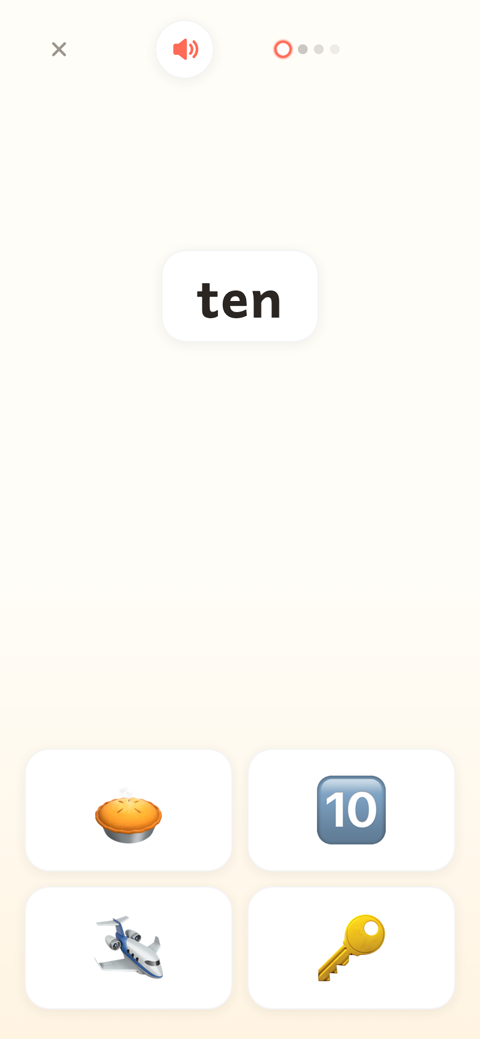
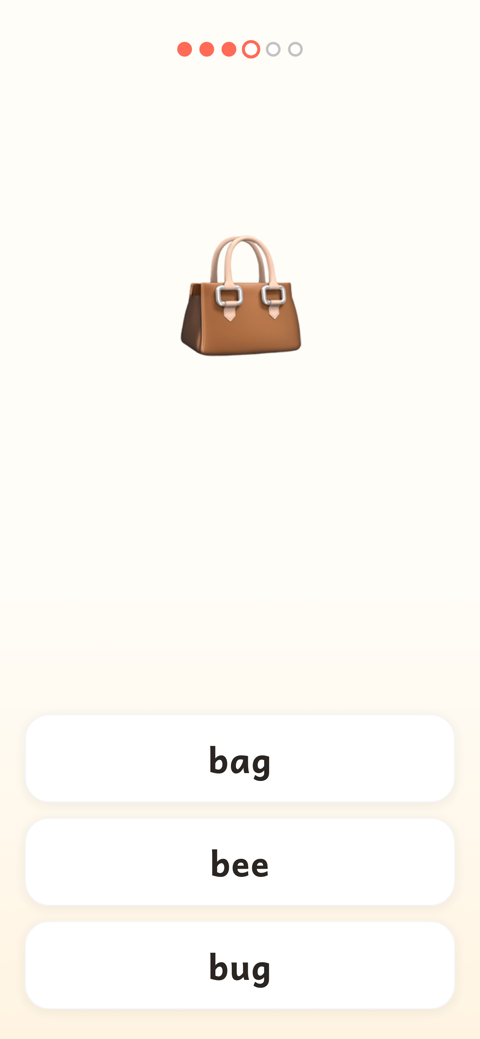
Word Safari takes the opposite approach on purpose. A round runs a few minutes: sound out a word, match a picture, spell it back. Short enough to fit before school or as the calm few minutes before bed, and short enough that a child asks for another go rather than needing convincing. But every one of those short rounds draws on the same word bank and the same phonics ladder as the last, so a child's twentieth round genuinely builds on their first.
A shelf of separate games
Each mini-game is its own little world. Fun in the moment, but nothing about round twelve knows what happened in round three, and there is no shared sense of where a child actually stands.
Ten modes, one growing skill
Every round draws on the same word bank and the same phonics ladder, so a spelling round today and a story read last week both feed the same, single measure of where a child is.
A placement that keeps adapting, not a one time quiz
Plenty of platforms use the word "personalised." Fewer show a parent what that actually means, or what happens after the very first test.
Word Safari opens with a short placement round, roughly five minutes, built to always end on a win rather than stopping mid struggle. It is not a pass or fail test in the classroom sense, just a way of finding roughly where a child's sounds and words already sit before the real playing starts.
From there, every round keeps adjusting on its own. A child breezing through a batch of words gets nudged toward harder ones; a child finding a batch tricky gets a few easier wins before trying again. Nobody has to pick a starting level by hand, and nobody has to raise the difficulty manually as a child improves. Our phonics games page and placement test page both go into exactly how that adjusting works, round by round.
See a placement find your child's level
Play free now, no card needed, and watch the first round adjust to how your child actually answers.
Prefer to see it first? Try a round on the homepage demo →
The ten modes, and what they actually practice
Ten modes sounds like a lot to sort through. In practice, they arrive a few at a time, and each one is doing a distinct job.
Seven of the ten modes practice reading itself: matching a written word to its picture and a picture to its word, matching a whole sentence to what it means, filling the gap in a sentence built entirely from sounds already taught, building a sentence back into order, finding the word that rhymes, and catching a word that flashes past. The remaining three practice spelling on their own terms: filling in a missing letter, spelling a word with letter tiles pulled from a scrambled bank, and building a word up from the sounds inside it. Our spelling games page walks through those three in detail.
None of the ten arrive on day one. New modes are introduced gradually, matched to what the placement and ongoing play show a child is ready for, so a first session never feels like a wall of menus to sort through.
What's inside
Hand-curated across 7 phonics tiers, so there is real room to grow into.
Up to six children on one account, each with their own level and progress.
Single letters through digraphs and trigraphs, in a proven order.
Seven reading modes and three spelling modes, introduced gradually.
No ads, no catch, anywhere your child plays
A reading game is also a game a parent has to trust, on more than one front.
There is no ad slot anywhere in Word Safari, not a small one and not a skippable one. A round runs start to finish, sounding out a word, spelling it, reading a story, without a commercial break or a "watch this to continue" gate of any kind.
The free slice plays all of it and stays playable forever, no card needed to start and no countdown hidden behind a "free trial" label. If a family wants unlimited play, Word Safari Plus is one subscription, $8.99 a month or $89.99 a year, and it covers every child's profile in the household rather than charging per child. That price sits right here, not behind three more clicks. Read the full no ads promise on our ad-free reading app page.
No ads, offline, and private by default
Questions parents ask
Is this really a reading game, or is it just entertainment with a phonics label?
It is built as a game first, but every round draws on a real phonics ladder underneath. Nothing is asked before its sounds have been taught, and the ten modes exist to reinforce that same ladder from different angles, not to distract from it.
Is the free version actually free, or is it a limited trial?
The free slice of Word Safari stays playable forever, no card needed, ever: five rounds a day for each child, at her own level, and five fresh ones every morning. Every tier, every story and every game mode is in it already. Word Safari Plus lifts that daily limit for $8.99 a month or $89.99 a year, one subscription covering every child in the family, but nothing about the free tier is a countdown.
How does Word Safari figure out where my child should start?
A short placement round, about five minutes, finds a starting point and is built to always end on a win rather than stopping mid struggle. After that, every round keeps adjusting on its own as your child plays.
Are there ads, or anything else competing for my child's attention?
No. There is no ad slot anywhere in the game, no third party trackers, and nothing that interrupts a round to ask for attention it has not earned.