
Reading Fluency Games Built From Short, Repeated Rounds
Word Safari treats fluency as its own goal, not something that shows up on its own once decoding is done. Short rounds repeat at just the right difficulty, so reading stops sounding like sounding out and starts sounding smooth.
English spans ages 4 to 11 across 7 phonics tiers. German and Russian each run their own placement and their own pace.
When decoding is fine but reading still sounds halting
A lot of parents land here with the same story: their child can sound out most words, yet reading out loud is still slow, word by word, flat in tone.
Fluency is the skill sitting between decoding and understanding: reading accurately, at a natural pace, without stopping to work out every word one at a time. A child stuck before that bridge is usually not missing more phonics rules. They are missing enough easy exposure to the words they already know, so recognising them stops taking effort.
More new sounds and new words do not fix that on their own. What helps is meeting familiar words often enough, in short enough bursts, that reading them stops feeling like work.
Rereading is the fix, a game just runs it for you
Reading a favourite page again, or reading the same sentence a second time with a parent, already builds fluency; it is one of the oldest tricks in the book. The catch is that it needs an adult free to sit through it, most nights, for it to add up.
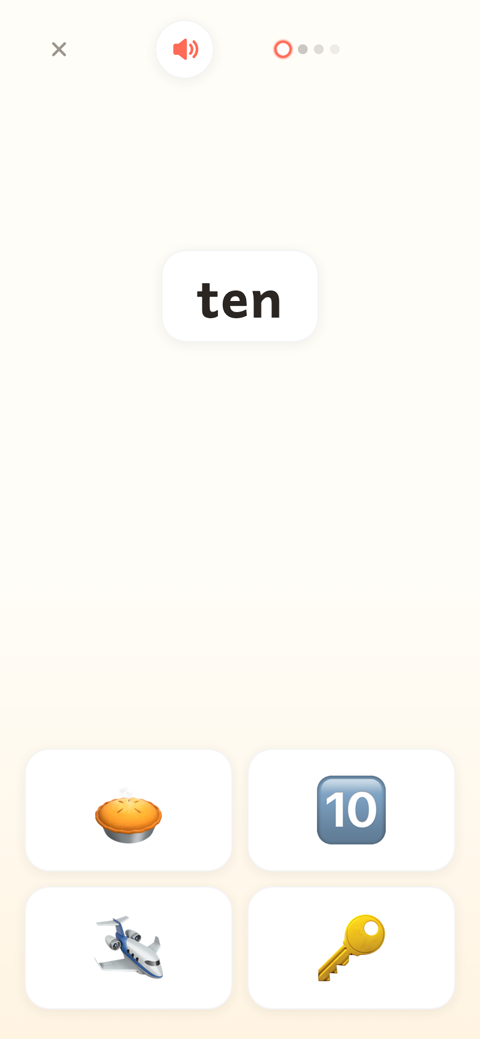
Word Safari's rounds work on the same principle without needing you at the wheel every time. Each round draws from a 1,347-word decodable bank, cycling familiar words back through new rounds instead of only pushing forward to new ones, so your child gets the repetition that builds speed without either of you rereading the same page by hand.
A five minute placement, then every round keeps adapting
You should not have to guess your child's reading level before starting, and you should not have to keep nudging the difficulty up yourself either.
Word Safari opens with a short placement, about five minutes, built to always end on a win rather than stall on a struggle. From there, every round after that keeps adapting: a child breezing through gets pushed a little faster, a child finding a batch tricky gets more of the same words again before moving on. See exactly how it works on our reading placement test page.
What's inside
Hand curated across 7 phonics tiers, enough for real repetition without repeating the same handful.
Up to six children on one account, each with their own level and progress.
Seven reading modes and three spelling modes, brought in a few at a time.
Single letters through digraphs and trigraphs, the ladder every round draws from.
No ads, anywhere your child plays
See a round adapt to how your child actually reads
Sign up free and let a short placement find where the next round should begin.
Prefer to see it first? Try a round on the homepage demo →
Questions parents ask
My child already sounds out words fine. Won't this be too easy?
Decoding and fluency are different skills, and a child can have one well ahead of the other. Placement finds where your child actually sits today, then keeps adapting round by round, so a strong decoder moves quickly into faster, smoother rounds instead of repeating words they already know cold.
Is this different from phonics or spelling practice?
Word Safari's 10 game modes cover both, 7 reading modes and 3 spelling modes, introduced gradually. Fluency here comes from how the rounds are built, short and often repeated at an adapting difficulty, rather than from one mode labelled fluency.
Why would short, repeated rounds help more than reading a whole book each night?
Rereading familiar words and passages is already a well known way to build speed and smoothness. A short round just runs that idea on its own, several times a week, without you needing to plan and sit through a rereading session each time.
How often should we play for it to help?
A few short rounds most days works better than one long session once a week. Rounds run just a few minutes each, the free slice stays playable forever, and everything works offline once the app is saved to your home screen, so a quick round fits before school or in a waiting room.