
What Age Do Kids Learn to Read? A Stage-by-Stage Answer
Most children learn to read somewhere between 5 and 7, with plenty of normal variation either side. What matters more than the exact age is the stage your child is actually at right now.
Word Safari covers English ages 4 to 11 across 7 phonics tiers, so wherever your child's stage turns out to be, there's real room to grow into it.
The honest, short answer
Most children learn to read simple words somewhere between age 5 and 7, usually in kindergarten or first grade. Some children start earlier, some later, and both can be entirely normal.
A 3 year old sounding out letters is not unusual, and neither is a 7 or 8 year old who only just started clicking with it. Reading is not a single switch that flips on one birthday. It is a string of smaller skills, hearing sounds, matching them to letters, blending them into words, that most children pick up in roughly the same order, just not always at the same pace.
Why stage matters more than the birthday on the calendar
Two 6 year olds can be at genuinely different points on the same ladder, and both can be doing fine. One might still be matching single sounds to pictures. Another might already be reading short sentences with blends like "st" and digraphs like "sh". Age tells you almost nothing about which of those two you are looking at.
That is the whole reason Word Safari starts every child with a short placement instead of a fixed "age 6 pack." A stage is something you can actually check. An age is just a guess dressed up as a number.
What actually changes at each stage
- Hearing the sounds inside words Often starts around age 3 to 4, well before any letters are involved.
- Matching letters to sounds Typically kindergarten or Reception, roughly age 4 to 5.
- Blending sounds into first words Simple three-letter words like "cat" or "sun," often around age 5.
- Blends, digraphs and first sentences Usually age 6 to 7, roughly Year 1 to Year 2.
- Reading whole stories with real fluency From about age 7 to 9 onward, and still building well past that.
If your child doesn't fit this pattern
Plenty of children don't move through these stages in a neat line, and that alone is not a sign anything is wrong. A child might sit confidently reading sentences while still mixing up a couple of digraphs, or breeze through blending but read slowly. That unevenness is common, not a warning sign on its own.
If you have a specific worry, a teacher or a paediatrician is always the right person to ask, and we won't pretend otherwise here. What we can offer instead is a clear, private way to see where your child stands today, so "is my child behind" turns into an actual answer rather than a guess based on what a classmate mentioned at pickup.
How to find out where your child actually is
Word Safari opens with a short placement round, about five minutes, that adapts as your child answers and always ends on a win. It is a starting estimate, not a verdict, and it keeps adjusting round by round after that as your child plays normally.
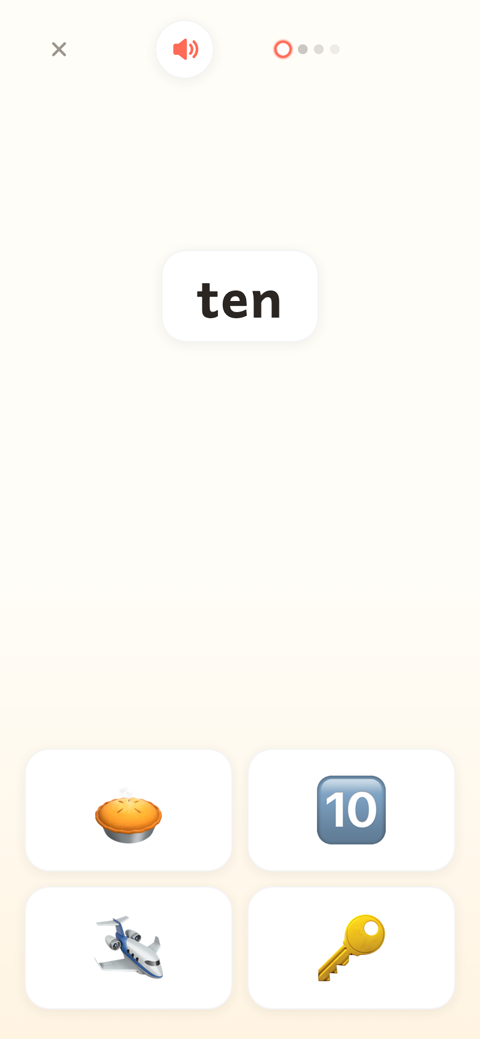
See the free reading placement test for exactly how it works, or jump straight in and let your child show you.
What's inside once you know their stage
Hand-curated across 7 phonics tiers, so a placement always has room to grow into.
Up to six children on one account, each with their own level and progress.
The ladder that carries a child from first sounds through to Year 6 vocabulary.
Reading and spelling both, introduced gradually as your child's stage moves on.
Find out today, not someday
Sign up free and let a short placement answer the question honestly, in minutes.
Prefer to see it first? Try a round on the homepage demo →
No ads, offline, and private by default
Questions parents ask
Is my child behind if they aren't reading yet at 6?
Not necessarily. The typical range runs from about 5 to 7, and children who start a little later than that often catch up within a term or two. What matters more than the exact birthday is which stage they're actually at, not the number on the calendar.
What age should reading practice start?
Earlier than most parents expect, just not with letters. Listening for sounds and rhymes can start from around age 3, well before formal blending or sentence reading begins. Word Safari's placement starts from roughly age 4, right where that early sound work hands over to letters.
How can I tell what stage my child is actually at?
The clearest way is to watch them try, not to guess from age alone. Word Safari's free placement takes about five minutes, adapts as your child answers, and always ends on a win, so you get an honest starting point instead of a guess.
Does starting early guarantee they'll stay ahead?
No, and that's worth knowing before you worry either way. Reading speed among classmates tends to even out over the early school years regardless of when a child started, so an early start is a head start, not a permanent lead, and a later start is rarely a lasting deficit.